THIRTY-TWO MILES OF SKY
Invictus
“A road is not long when you walk it one mile at a time.”
THE ROAD BEGINS BELOW ↓
“A road is not long when you walk it one mile at a time.”
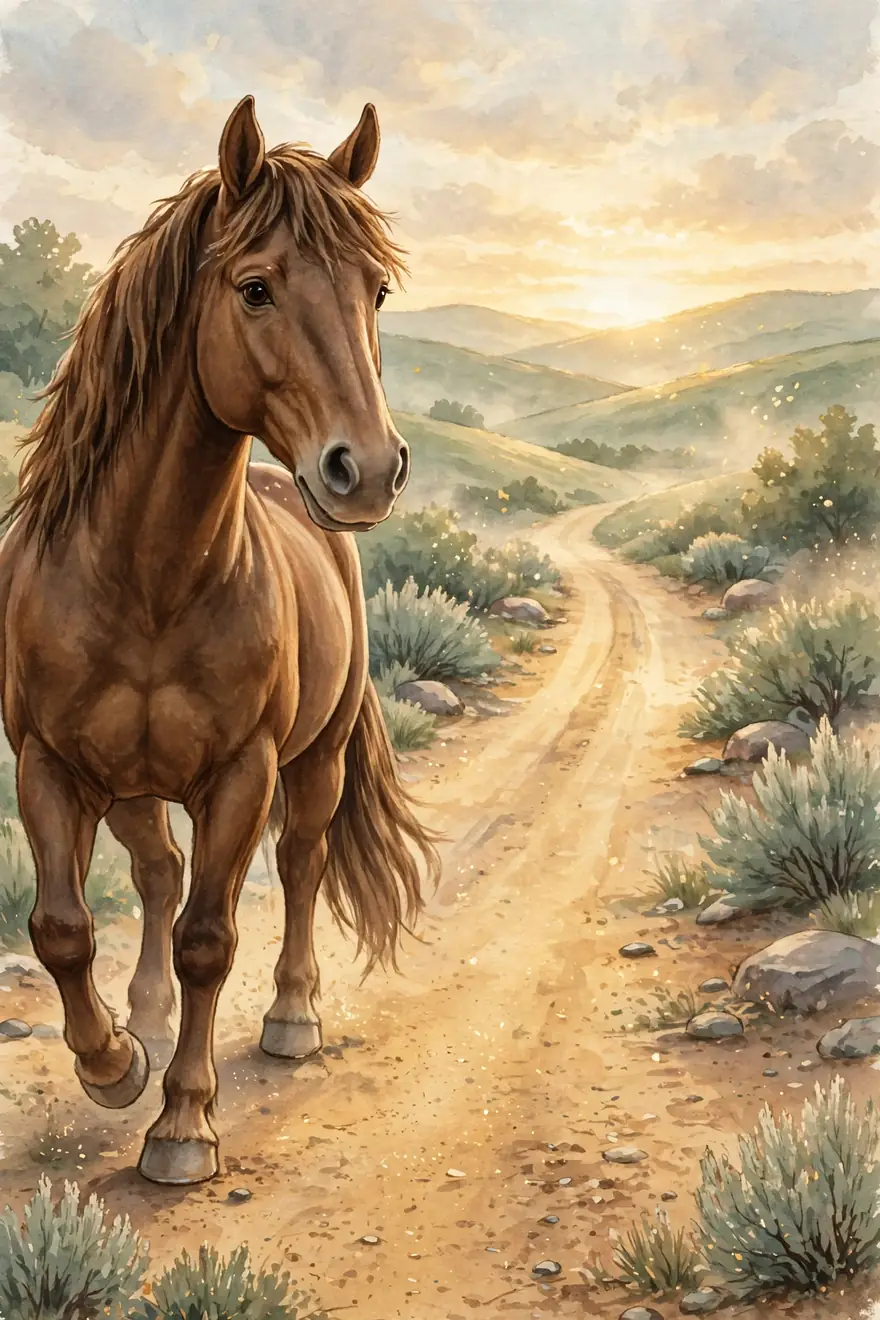
THE ROAD BEGINS BELOW ↓Invictus is a war horse — great, dark, and steady, with dark brown eyes that have seen a great deal of weather and are frightened of none of it. His mane takes the wind the way the hills take the seasons: without argument.
His name means unconquered, and the road is where you understand why. Not because he is fastest, but because there has never yet been a mile that made him turn back.
The long road is never the same road twice. It changes its colours as the day walks beside you — and Invictus walks through all of them at exactly the same pace.
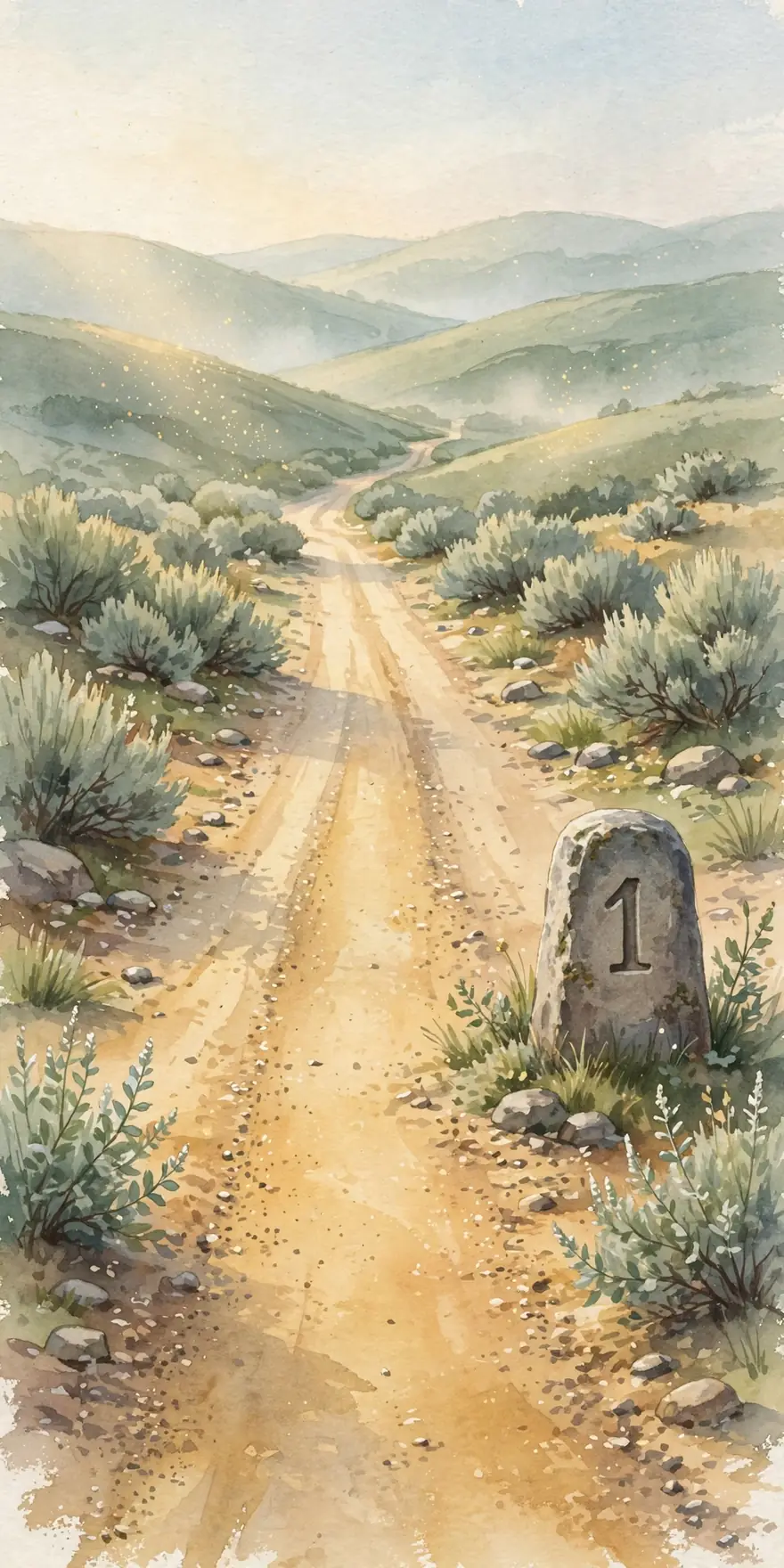
The first mile, when the stones are still cool.
Dawn is the road at its kindest: gold dust, long soft shadows, and a whole day that has not asked anything of you yet.
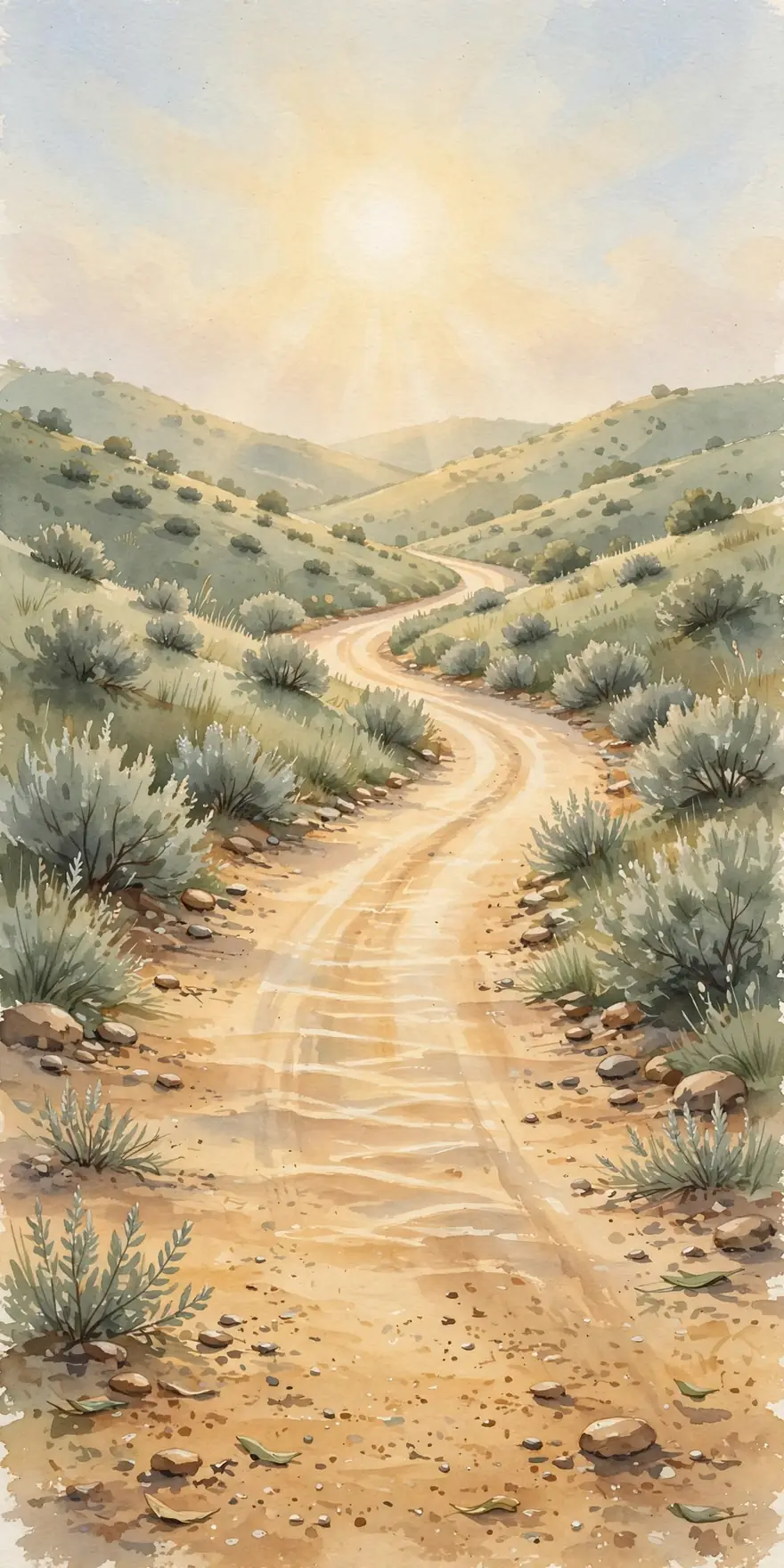
Open country, and the sun standing straight overhead.
By noon the hills open out and there is sage as far as seeing goes. This is the honest middle of the day, where the only way is onward.
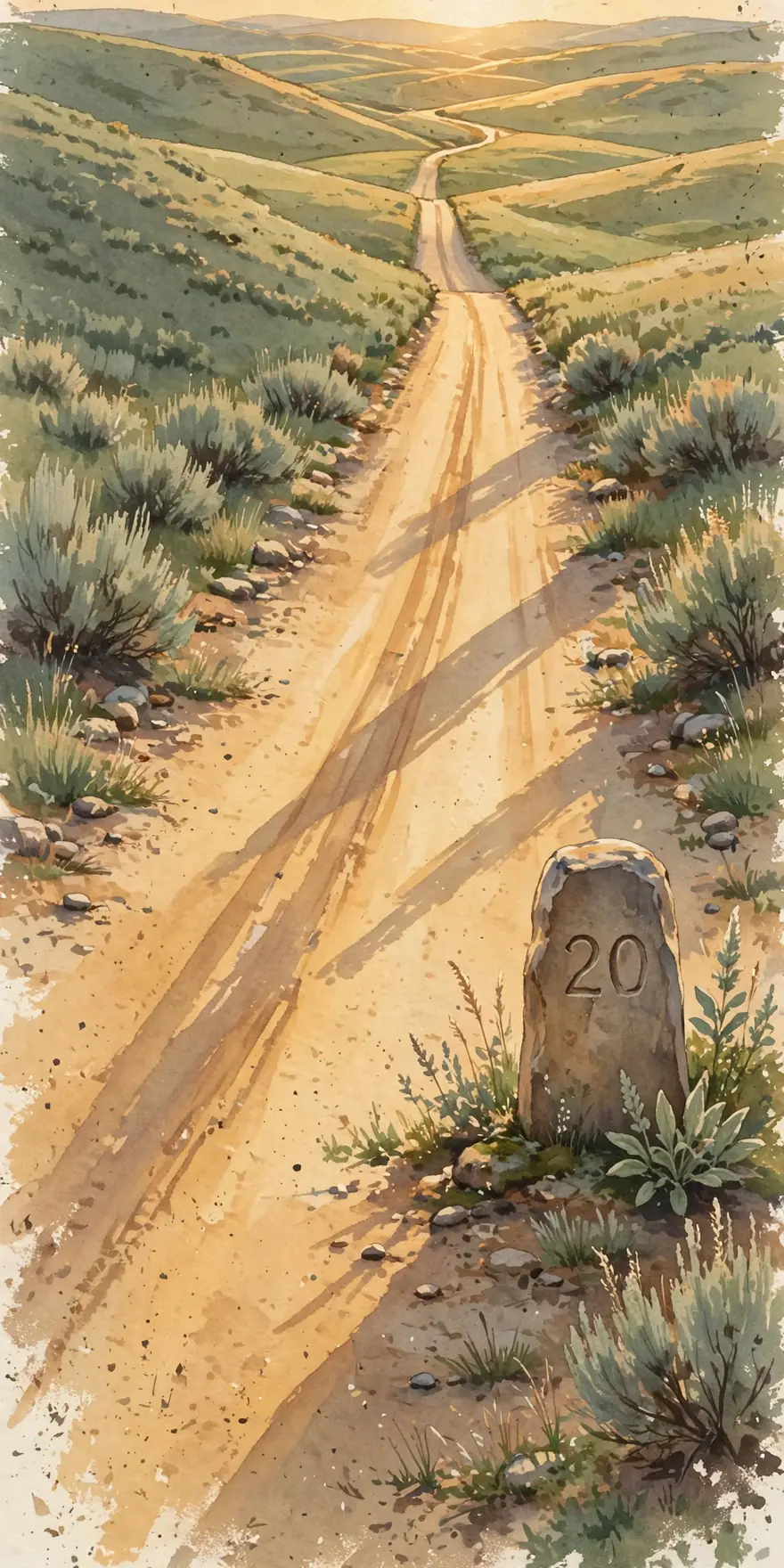
Afternoon lays its long shadows across the dust.
Weather comes and goes over the road — dust, wind, a sky that cannot make up its mind. Invictus has walked through all of it. The gold hour is his favourite: the day, tipping its hat.
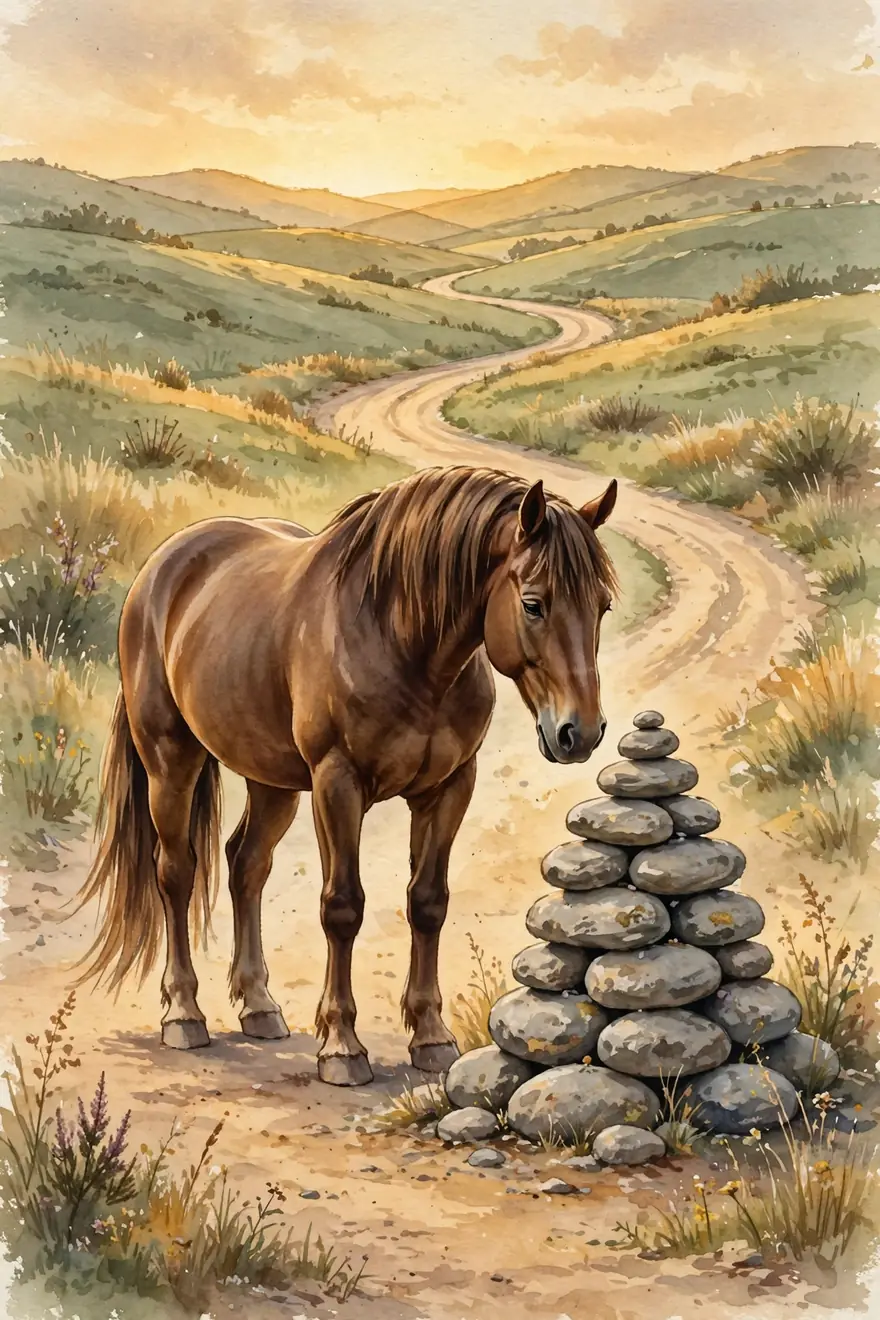
At the end of the road, the cairn keeps every traveller’s promise.
Dusk is where the road ends — for today. Every traveller leaves one stone at the cairn, and the road remembers every one of them.
This is the journey itself, played right here on Invictus’s page. Thirty-two miles of dust and sage, and four times the road will ask something of you. Walk it all the way to the cairn.

Invictus walks the long road — and today you walk it with him. The road runs out from your own feet.
Thirty-two miles of dust and sage. Four times, the road will ask something of you.
When you reach the cairn at thirty-two miles, touch it — there is room at the top for your stone.
“The road goes on. So do we.”
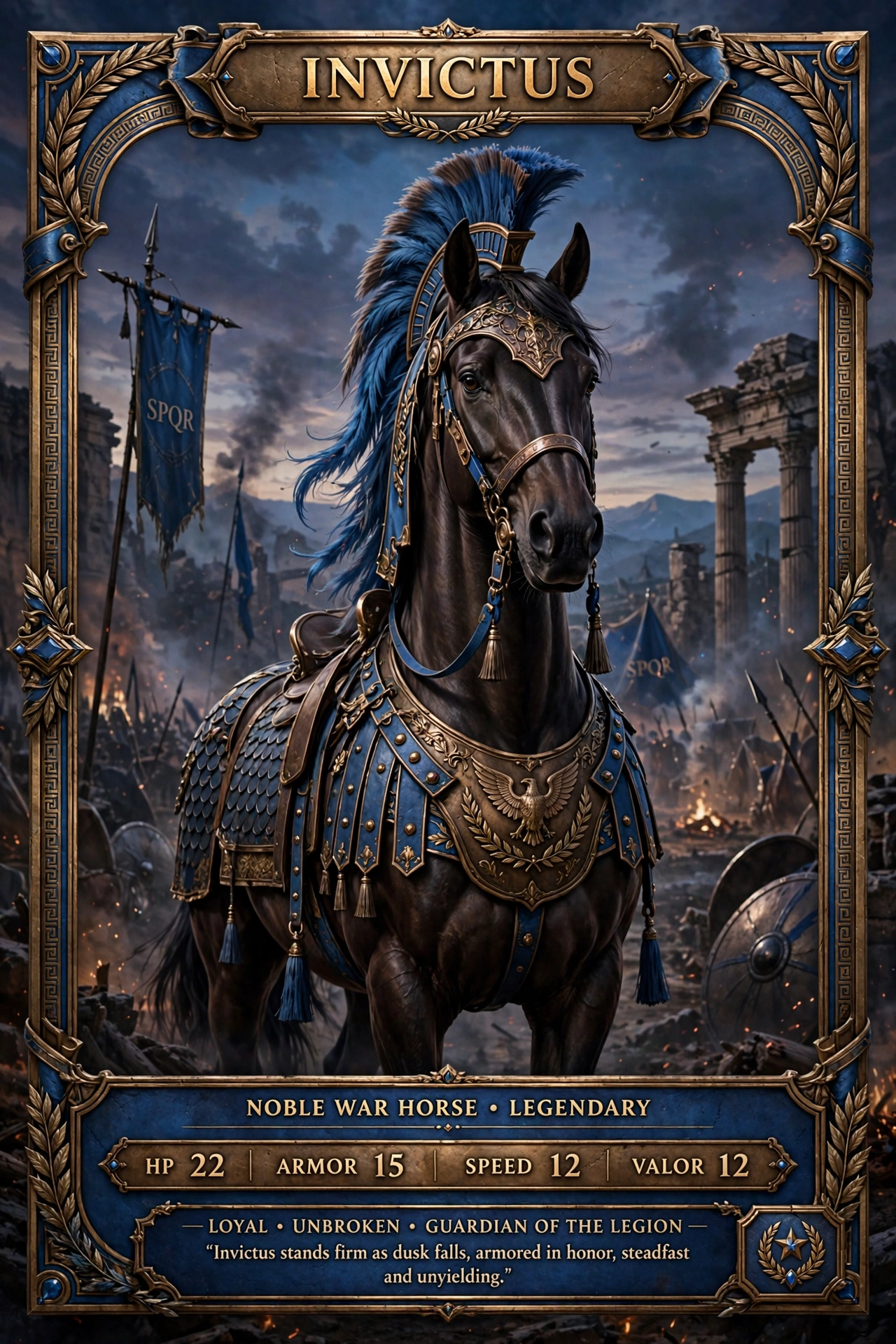
…
Travellers leave a stone here, to say: I walked this road too. One stone a day is plenty.
The first miles teach your legs the shape of the day. Invictus does not hurry them. A road begun in a rush, he knows, is usually a road argued with all the way home.
The middle miles are the honest ones, where the start is too far behind to boast about and the end too far ahead to see. This is where walking becomes a promise you keep to yourself, one step at a time.
The late miles teach gratitude: for water, for shade, for company, for hooves that held. By then the road has stopped being a distance and become a story you are carrying.
Partway along the road stands a cairn — a tower of flat stones, each one left by a traveller who passed this way. Nobody’s name is on any of them. That is rather the point.
To leave a stone is to say, quietly: I was here, the road was long, and I kept going. And to read the cairn is to understand that you are never the first one to find a mile hard — and never the only one to finish it.
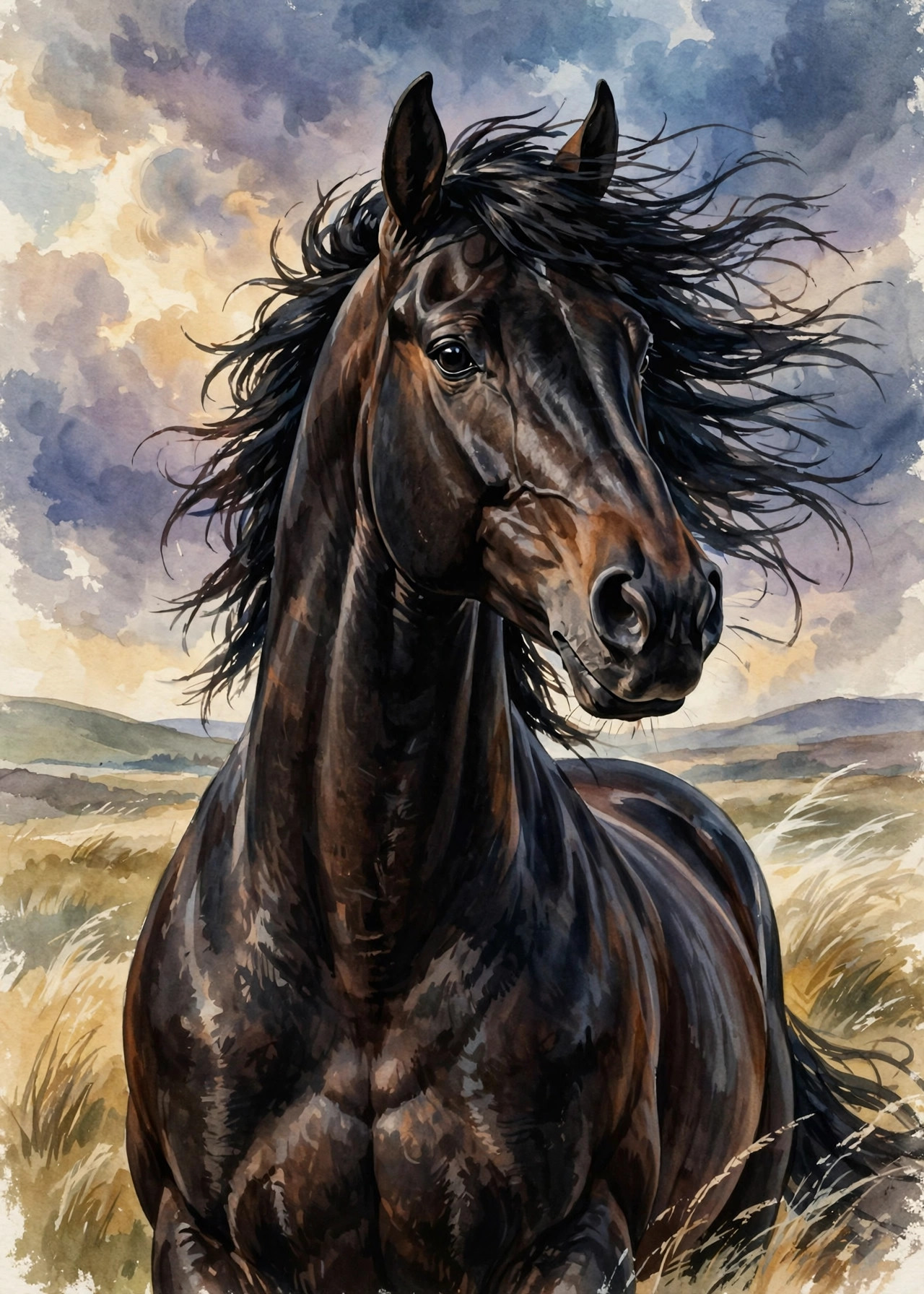
The card keeps him as the road knows him: dark coat, mane full of weather, and dark brown eyes looking straight down the next mile.